Outage-Constrained Sensing Threshold Design for Decentralized Decision-Making in Cognitive Radio Networks Abstract? Efficiency in spectrum utility has been a concern in wireless communications for a long time. Cognitive radios have been seen as a solution to occupy the gaps in the licensed spectrum through opportunistic spectrum access and simultaneous spectrum sharing techniques. For this purpose,…
PAPR Reduction using Cl ipping and Filtering Technique for Nonlinear Communication Systems Abstract?Orthogonal frequency division multiplexing (OFDM) is one of the widely used modulation techniques for nonlinear communication systems. It offers high data rate, spectral efficiency, robustness to multi path fading, simple receiver design, etc. But, it suffers from high peak-to-average power ratio (PAPR) which…
Performance Analysis of Ray Tracing Assisted Beamforming Techniques for future mm-wave wireless systems Abstract?The use of large-size antenna arrays to implement pencil-beam forming techniques is becoming a key asset to cope with the very high throughput density requirements and high path-loss of future millimeter-wave (mm-wave) gigabit-wireless applications. Suboptimal beamforming (BF) strategies based < Final Year...
Physical Layer Security in Ultra-Dense Networks Abstract-We study the Physical Layer Security (PLS) in Ultra-Dense Networks (UDNs) considering the close proximity of the users to the cells. In particular, we show the effect of the small cells? density, the users? density and the eavesdroppers? density on the average secrecy rate. To this end, stochastic geometry…
Pilot Design for Sparse Channel Estimation in OFDM-Based Cognitive Radio Systems Abstract?Pilot Design for Sparse Channel Estimation in OFDM-Based Cognitive Radio Systems. In this correspondence, sparse channel estimation is first introduced in orthogonal frequency-division multiplexing (OFDM)-based cognitive radio systems. Based on the results of spectrum sensing, the pilot design is studied by minimizing the coherence…
Pilot Reduction Techniques for Sparse Channel Estimation in Massive MIMO Systems Abstract-The current high gain frequency division duplex (FDD) Massive multiple-input, multiple output (MIMO) systems pose several challenges to carry out the downlink beamforming. Specifically, downlink beamforming requires a channel estimation that usually needs long training and feedback overhead, scaling with the number of antennas…
Power Minimization Precoding in Uplink Multi-Antenna NOMA Systems With Jamming Abstract-By exploiting the power domain, non-orthogonal multiple access (NOMA) is capable of improving system spectrum efficiency and supporting massive concurrent connections. However, NOMA transmissions are susceptible to jamming attacks. In this paper, we study anti-jamming policies in a NOMA system by using the multiple-input-multiple-output (MIMO)…
Predictive Data Delivery to Mobile Users through Mobility Learning in Wireless Sensor Networks Abstract? We consider applications, such as indoor navigation, evacuation, or targeted advertising, where mobile users equipped with a smart-phone class device require access to sensor network data measured in their proximity. Speci?cally, we focus on ef?cient communication protocols between static sensors and…
Probabilistic Sequence Translation-Alignment Model for Time-Series Classification Abstract?Probabilistic Sequence Translation-Alignment Model for Time-Series Classification. We tackle the time-series classification problem using a novel probabilistic model that represents the conditional densities of the observed sequences being time-warped and transformed from an underlying base sequence. We call it probabilistic sequence translation-alignment model (PSTAM) since it aims to…
QoS-Oriented Mode, Spectrum, and Power Allocation for D2D Communication Underlaying LTE-A Network Abstract?the problem of resource allocation for device-to-device (D2D) communication in a Third- Generation Partnership Project (3GPP) Long-Term Evolution Advanced (LTE-A) network. The users in the network can operate either in a traditional cellular mode, communicating with each other via the evolved NodeB (eNB),…
Quantized Massive MU-MIMO-OFDM Uplink Abstract?Abstract Coarse quantization at the base station (BS) of a massive multi-user (MU) multiple-input multiple-output (MIMO) wireless system promises significant power and cost savings.Coarse quantization also enables significant reductions of the raw analog-to-digital converter data that must be transferred from a spatially separated antenna array to the baseband processing unit. The…
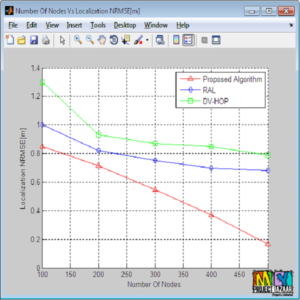
Range – free Localization Algorithm for Anisotropic Wireless Sensor Networks Abstract-In the first place, here propose a novel range-free localization algorithm tailored for anisotropic wireless sensors networks (WSN)s. Using the proposed algorithm, each regular or positionunaware node estimates its distances only to reliable anchors or position-aware nodes. The latter are properly chosen following a new…

 Free
Free